
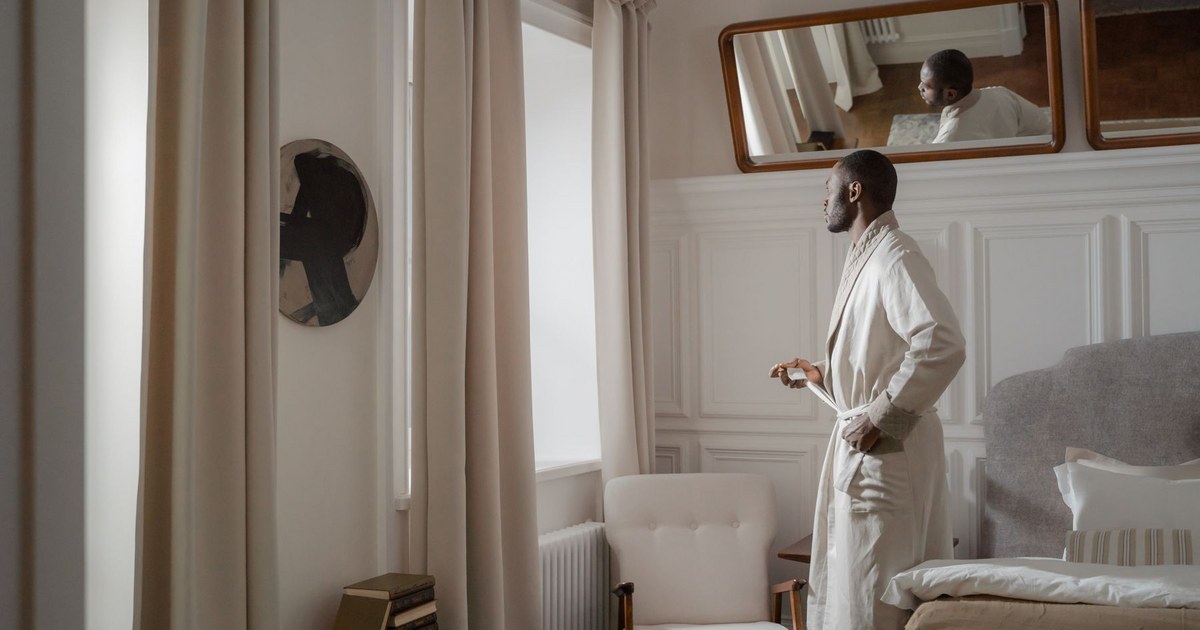
No one around to speak English with? That's not a real obstacle — the quietest bedroom can become the best classroom you have. Here's how to turn time alone at home into a genuine practice session.
01 — Why it works
Your brain doesn't know the difference
Producing a sentence out loud engages the same circuits whether or not someone is listening. It's active production — searching for the word, building the sentence, saying it — that builds fluency, not the presence of an audience.
Applied linguistics researchers have documented this: deliberate solo practice (talking alone, recording yourself, imitating native speakers) produces measurable fluency gains, sometimes comparable to direct human coaching.
02 — Five concrete exercises
What to actually say when you're alone
- Narrate your day — describe out loud every action as you do it: "I'm making coffee. I'm opening the window."
- The mirror exercise — talk to yourself in front of a mirror for two minutes about something simple: your day, your weekend plans.
- The solo debate — take a two-sided question and argue each position out loud, in turn.
- The evening recap — tell your day in English before bed, like a spoken diary.
- The recording habit — one minute of free speech a day, replayed a week later to measure progress.
03 — Getting past the awkwardness
The main obstacle isn't linguistic
The awkwardness of talking to yourself usually fades after a few days of practice — and it's precisely the absence of an audience that makes the exercise so useful: no possible judgment, so no fear of making a mistake, the number one barrier to speaking up for most learners.
04 — FAQ
Frequently asked questions
Do you need good English to get started?
No — even with limited vocabulary, describing simple actions in simple words already builds the automaticity of spoken production.
How much time per day should you spend on it?
15 to 20 minutes daily, consistently, produces better results than one long session once a week.
Is recording yourself actually useful?
Yes — listening back a week later lets you objectively hear your progress, something your ear doesn't always catch in real time.
05 — Sources
Sources
References
- How to Practice Speaking Alone: Self-Talk and Mirror Exercises
- polyglottistlanguageacademy.com
- Talking To Yourself: Is It Effective? — Leonardo English
- leonardoenglish.com
Réagissez
Commentaires